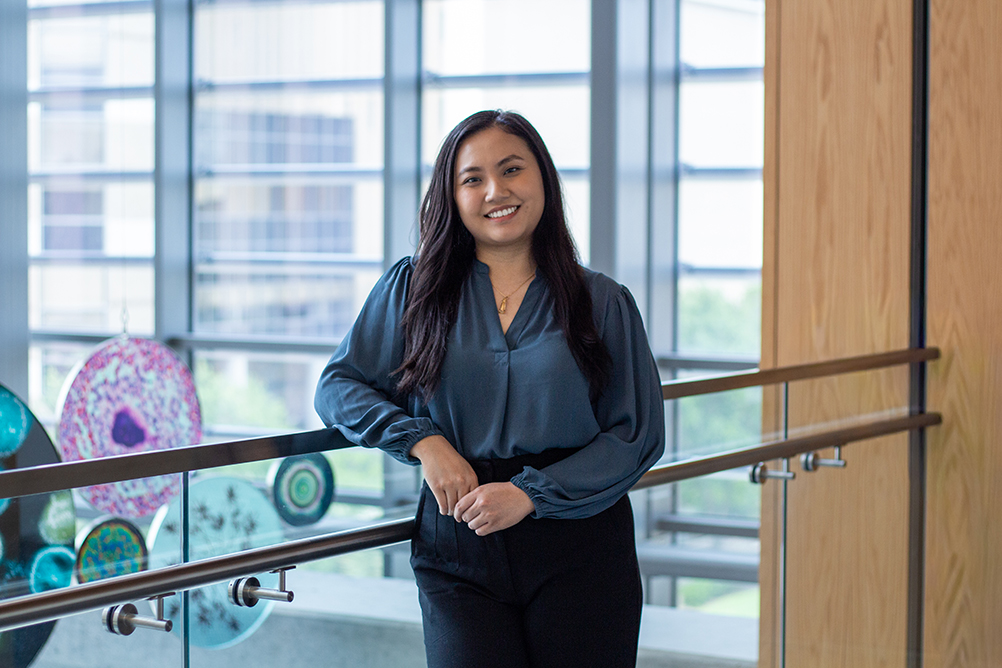
When Anh Truonghuynh talks about public health, she keeps returning to one principle — meet people where they are. For the recent UTMB School of Public and Population Health graduate, that means listening before proposing solutions and recognizing that health decisions are shaped by cost, time, culture, trust, and lived experience as much as by information.
That idea did not come to her in the abstract. It grew out of personal experience, clinical training, and the work she completed at UTMB as an MPH student in epidemiology.
Growing up in Houston in a Vietnamese immigrant family, Anh saw early how easily communication gaps can shape a person's experience with health care. She often helped translate for her mother and later noticed similar gaps in clinical settings beyond her own family. She saw how people could be misunderstood, how cultural habits or financial constraints could be mistaken for indifference, and how quickly patients could be judged without anyone fully understanding what they were balancing.
Those observations stayed with her as she moved through health-related training and eventually made the decision to pivot from medical school into public health. Epidemiology stood out because it gave her a strong analytical foundation while still keeping her connected to questions she cared about most. She liked the quantitative side of the field, but she was just as interested in what happens when data meets real life — when research, policy, and health communication reach people whose decisions are shaped by far more than a chart or diagnosis.
At UTMB, that perspective came into focus through two very different capstone experiences.
What the Community Garden Survey Left Unanswered
For her applied practice experience, Anh worked with partners supporting residents at Sandpiper Cove in Galveston. The project centered on a proposed community garden designed as a mental health intervention as much as a food access initiative — giving residents a shared space for activity, connection, and healthy cooking without requiring them to navigate a clinical system. She helped develop and analyze surveys, identify residents' interests, and shape materials such as brochures and event outreach that could make the garden feel accessible and useful.
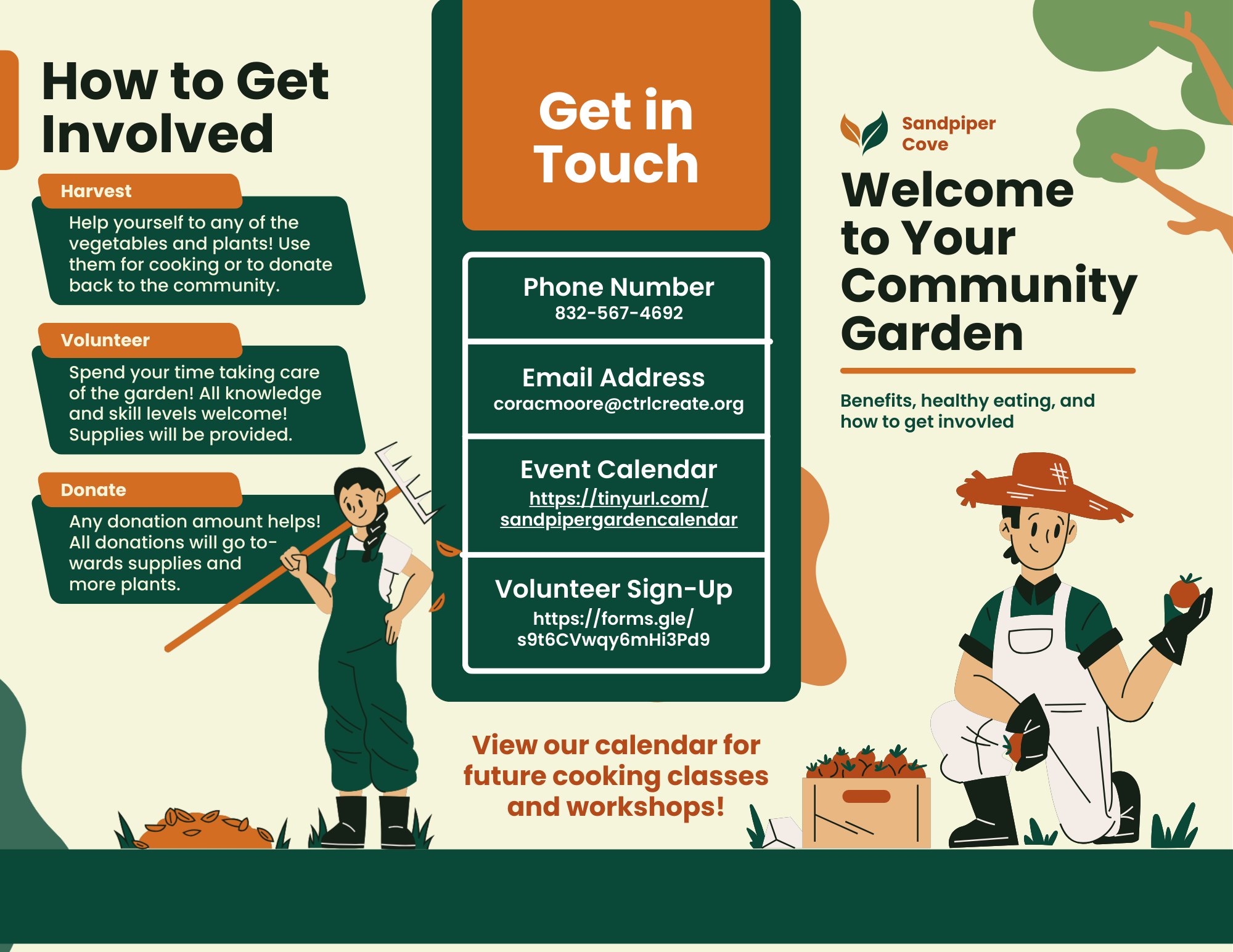
What stood out to her was not just what residents said they wanted grown, but how they responded to the broader idea of health. Survey responses showed interest in healthy cooking, meal preparation, and practical workshops connected to the garden. Direct questions about health conditions often went unanswered.
For Anh, that gap was instructive. People may care deeply about their health and still hesitate to answer medical questions, seek formal care, or speak in the language health systems expect. Sometimes cost is the barrier. Sometimes it is time. Sometimes it is mistrust, stigma, or the simple fact that daily life leaves little room for appointments, follow-ups, or long explanations. A garden, a cooking class, or a community event can open a conversation in a different way.
That lesson strengthened a view she already held. Public health programs are more likely to work when the people designing them understand what a community values, what feels realistic, and what kinds of changes people are actually ready to make. Otherwise, even well-intended efforts can feel imposed from the outside.
"Policies and programs will not be effective unless public health workers are willing to meet people where they are rather than arriving with plans of their own and expecting immediate buy-in."
Anh Truonghuynh, MPH '25, Epidemiology
Reproductive Law and the Families It Hasn't Caught Up To
That same attention to lived experience shaped Anh's integrative learning experience, even though the topic was very different. Her ILE examined embryo disposition disputes involving same-sex couples and individuals, focusing on how legal and ethical frameworks built around narrower assumptions of family formation can produce inequitable outcomes — and, critically, measurable mental health consequences. Her paper looked closely at how questions of reproductive agency, legal recognition, and mental health intersect when laws and clinic processes have not kept pace with the families they now affect.
On the surface, the Sandpiper Cove project and the ILE seem to sit at opposite ends of public health. One is community-based and hands-on. The other is policy-oriented and analytical. Anh sees them as closely connected — and both, in her view, are fundamentally about mental health. The garden addresses it through implementation, creating a setting where people can build connections and reduce stress without ever walking into a clinic. The ILE addresses it through policy, examining how legal frameworks that fail to recognize certain families compound the psychological strain those families already carry. She does not view policy work and community work as competing directions — she sees them as parts of the same effort. Research and policy can name a problem, define it, and point toward change. Community-facing work shows what that change looks like in practice, what barriers remain, and whether the solution actually fits the people it is meant to serve.
That way of thinking also shapes how she talks about health professionals more broadly. Anh believes technical skill is essential. She also believes something is lost when training leaves too little room for empathy, cultural awareness, active listening, and the social realities patients bring into an exam room. In her view, people are better served when health professionals are prepared to connect with patients as individuals rather than assuming that everyone has the same time, resources, beliefs, or comfort with the system.
The Mental Health Barriers She Plans to Work On
Five years from now, Anh sees herself working to improve mental health access and education, especially in communities where stigma, cost, and cultural expectations still keep people from seeking care. She is drawn to community-based work and to roles that let her stay close to people's day-to-day experiences, whether through research coordination, program work, or eventually further study.
As she begins her career, she is especially interested in work that connects analysis with action. The setting may vary, but the throughline is already clear. Anh wants to help build systems that listen first, respond with care, and make it easier for people to feel seen before asking them to change.
SPPH graduates complete capstone experiences that connect research and real-world public health practice. Explore MPH programs at the UTMB School of Public and Population Health.