A recent UTMB MD/MPH graduate turned a practicum project into a public-facing data analysis of nursing home quality across Texas.
Helen-Margaret Onuorah, a recent graduate of UTMB’s MD/MPH program, published an analysis in the Daily Yonder examining rural and urban nursing home staffing and health inspection ratings.
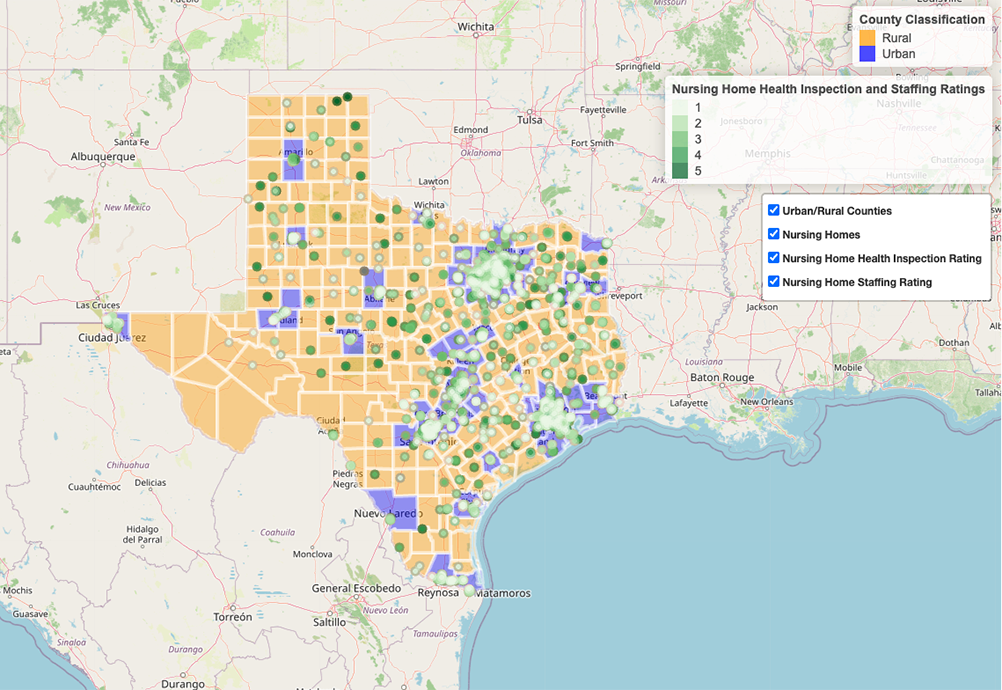
The article, In Texas, Rural Nursing Homes Outperform Urban Facilities on Some Key Metrics, was published as part of the Daily Yonder’s Rural Index. Helen completed the data analysis and created the maps featured in the article.
Dr. Brian Downer mentored Helen during the practicum experience. Helen will begin a neurology residency at Dell Medical School this summer.
The analysis found that rural nursing homes in Texas ranked slightly higher than urban facilities on staffing and health inspection measures.
What Helen examined
Helen used the Centers for Medicare and Medicaid Services Provider Information database to examine 1,176 nursing homes across Texas. The analysis compared rural and urban facilities using CMS’s 5-star quality rating system.
CMS staffing ratings are based on six measures, including nurse hours per resident per day and staff turnover. Health inspection ratings are based on nursing home surveys, complaint surveys, major health deficiencies, and infection control.
1,176 Texas nursing homes examined | 48% Rural facilities with 4- or 5-star inspection ratings | 27% Urban facilities with 4- or 5-star inspection ratings |
Findings from the Texas data
Nearly 70% of the nursing homes in the analysis were located in metro areas. Among urban nursing homes that reported staffing data, nearly 90% had a 3-star staffing rating or lower. Among rural nursing homes, 84% had a 3-star staffing rating or lower.
The health inspection data showed a wider difference. Rural nursing homes had a higher share of 4- and 5-star health inspection ratings than urban nursing homes, 48% compared with 27%.
The article also notes limits in the data. The CMS database does not provide detail on the specific types of health deficiencies identified, so the analysis does not determine why rural facilities received higher inspection ratings.
Rural facilities still face pressure
The findings do not remove the challenges facing rural nursing homes. The article notes that nearly two-thirds of Texas nursing homes that have closed since 2018 were located in rural areas, citing reporting from the Texas Tribune.
Helen also discusses the Texas Rural Nursing Recruitment & Retention Program, which offers stipends to support nurse recruitment and retention in rural medical settings. The article notes that short-term stipends do not fully address longer-term wage and infrastructure pressures.
Applied public health training in practice
Helen’s practicum project connected data analysis, mapping, aging, rural health, and public communication. It also shows how MD/MPH training can help students examine health questions at both the clinical and population levels.
For SPPH, the project is a concrete example of applied public health training: a student used public data, examined a practical health care question, created visual tools, and communicated findings for a broader audience.
Read Helen’s full analysis in the Daily Yonder. The article includes maps and additional context on nursing home staffing and health inspection ratings across Texas.