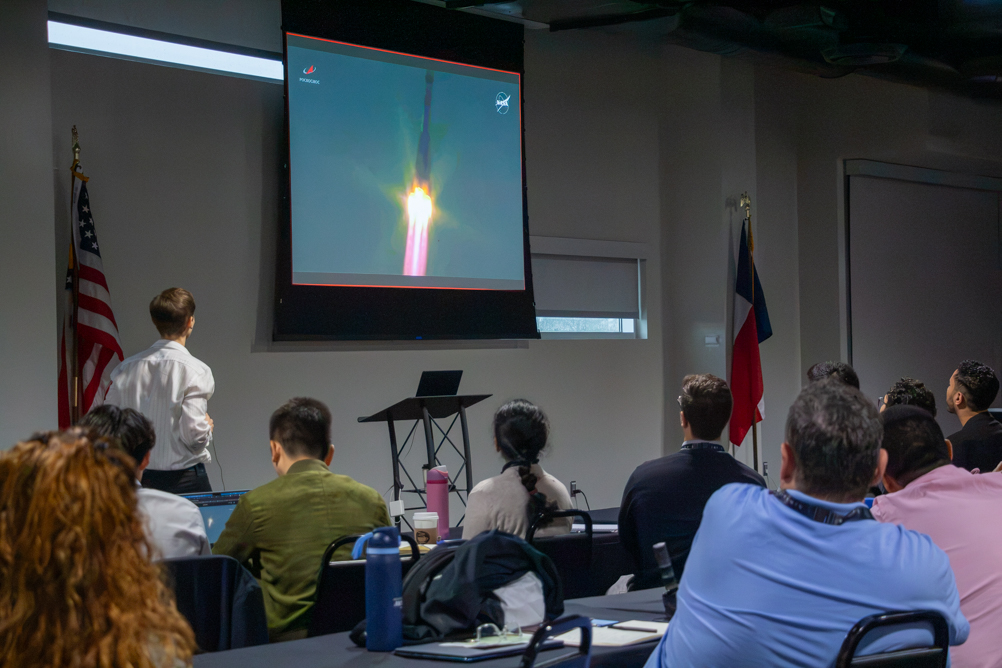
At Space Center Houston, PASM participants heard from medical leaders working across government and industry — and paused to watch a graduate of UTMB’s Aerospace Medicine Residency launch to the International Space Station.
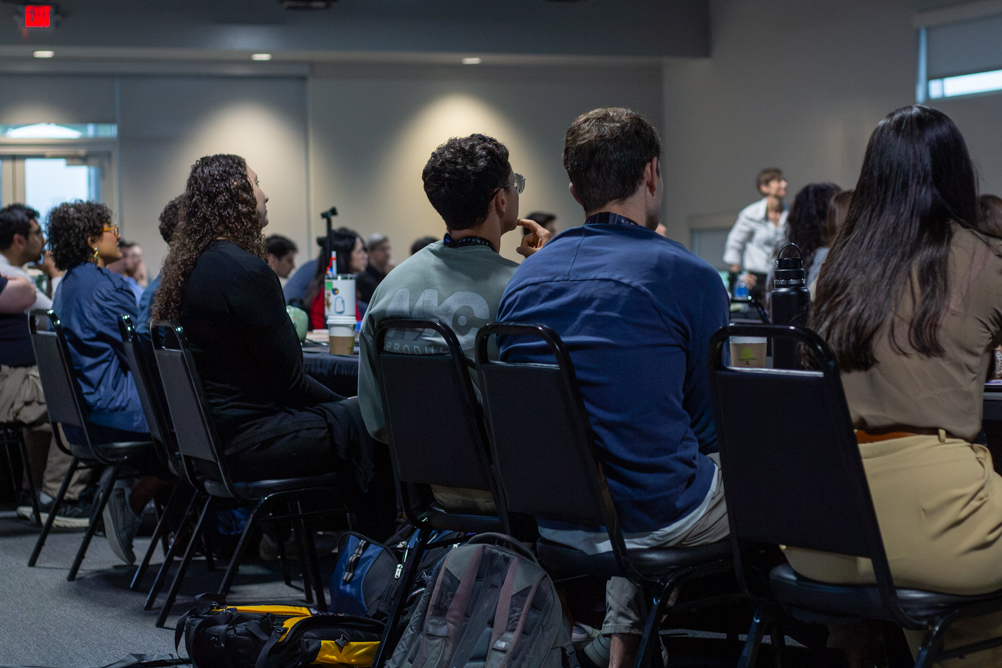
At 9:47 a.m. Central on Tuesday, July 14, the schedule at Space Center Houston stopped mattering for about nine minutes.
On screen, half a world away at the Baikonur Cosmodrome in Kazakhstan, a Soyuz rocket lifted NASA astronaut Anil Menon and Roscosmos cosmonauts Pyotr Dubrov and Anna Kikina toward the International Space Station. Participants in UTMB’s Principles of Aviation and Space Medicine (PASM) course watched together as a graduate of the university’s Residency in Aerospace Medicine left the planet.
Menon was beginning his first spaceflight after a career that included helping establish SpaceX’s medical program as one of the company’s earliest flight surgeons. He completed his aerospace medicine residency and Master of Public Health at UTMB in 2012.
Menon was not the only UTMB-trained physician connected to the mission. James Pattarini, the crew surgeon, and Kristi Ray, the deputy crew surgeon, also completed UTMB’s Residency in Aerospace Medicine. One alumnus was aboard the spacecraft, while two others were part of the ground-based medical team supporting his planned eight-month mission.
For the PASM participants watching from Houston — among them physicians, students, researchers and other health professionals at many career stages — the launch made an alumni connection tangible.
It connected the course to a larger UTMB community whose graduates have become astronauts, NASA flight surgeons, researchers and medical leaders throughout the space sector.
A tradition since 2011
The launch became the centerpiece of Commercial Space Day, a tradition within PASM since 2011. This year’s speaker roster brought together medical leaders from Blue Origin, Starlab, SpaceX, Virgin Galactic, Axiom Space and Vast. Their presentations ranged from suborbital passenger flights and private astronaut missions to lunar exploration and the design of commercial space stations.
Each speaker approached a different question. Together, they showed how medicine shapes human spaceflight long before an emergency occurs.
Testing accepted practice against flight data
UTMB Residency in Aerospace Medicine graduate Rebecca Blue, Medical Director of Blue Origin, opened with Grand Rounds drawing on spaceflight medical records. She examined how mission data can put long-accepted medical practices to the test, and how the findings inform passenger screening, preparation and access to suborbital flight. Her presentations demonstrated a central habit of aerospace medicine: testing accepted practice against evidence and then translating the results into operational decisions.
Building medicine into the hardware
Jennifer Law, Chief Medical Officer of Starlab and another UTMB residency graduate, showed why physicians need to be involved before a spacecraft’s design is final. She described how medical procedures, equipment and layout can be rehearsed and refined while a station’s design can still be changed, making medical operations part of habitat design rather than something added after construction.
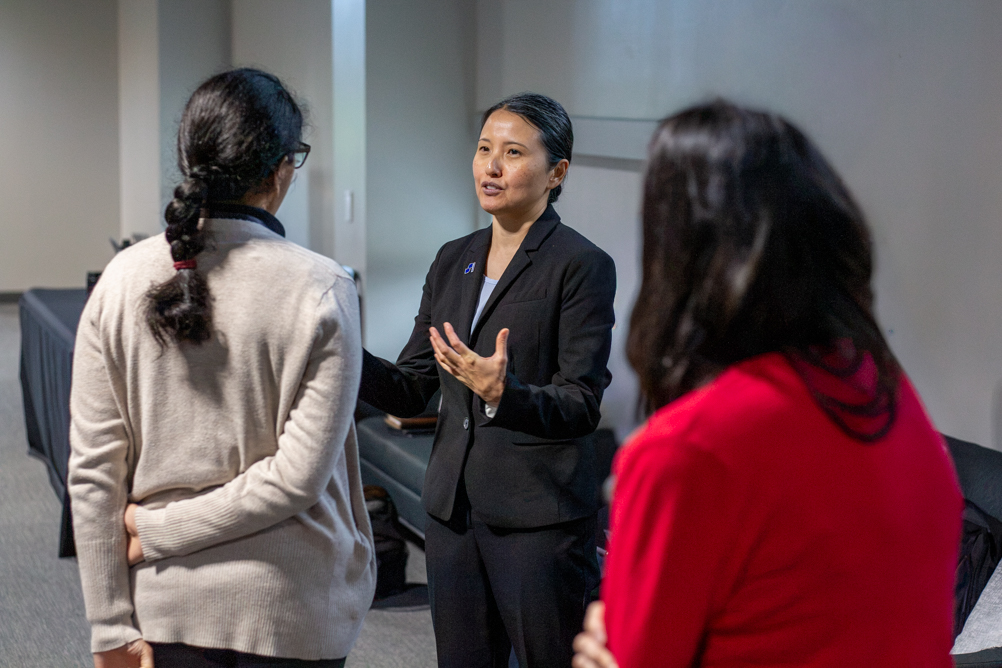
Amran Asadi of SpaceX described the unusually broad scope of a commercial space medicine team. He followed medical responsibilities across an entire mission — screening, preparation, crew training, medical kits, procedures, in-flight support and recovery — and pointed to internships, rotations and other entry points through which trainees have contributed to that work.
Deciding who can fly—and under what standards
Duncan Hughes, Chief Medical Officer of Virgin Galactic, focused on a problem created by broader access to space: how to evaluate people who may be older, have more complex medical histories and receive far less training than career astronauts. He described an inclusion-oriented approach built around risk mitigation rather than a fixed list of disqualifying conditions, and showed how medical teams can create a defensible evaluation process even when regulations are limited and the evidence base is still developing.
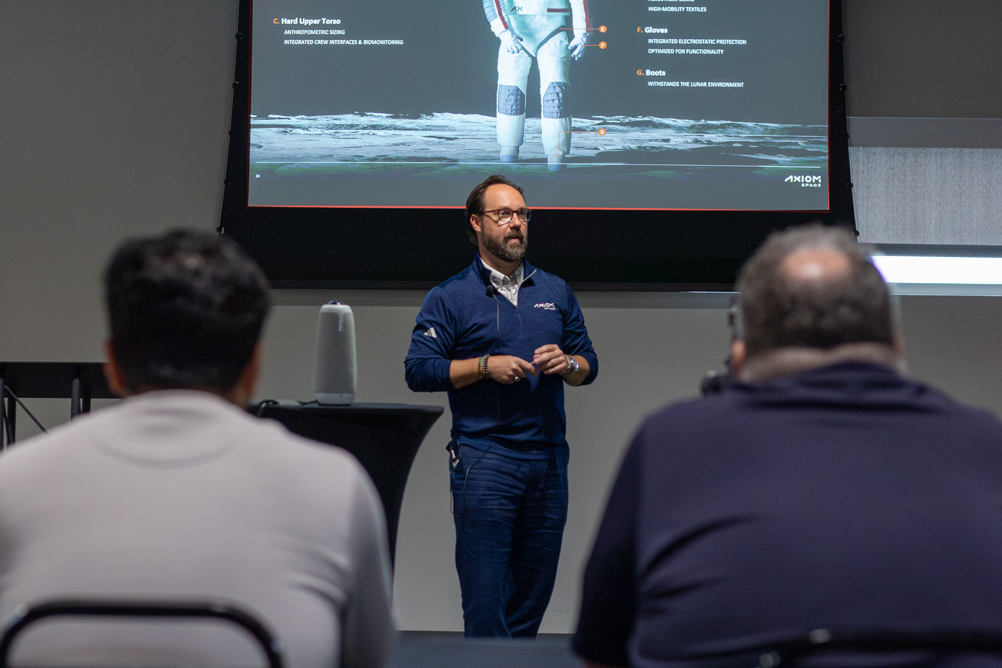
Mike Harrison, Chief Medical Officer of Axiom Space, demonstrated how that process must expand as commercial missions grow more complex. He described a medical organization that reaches well beyond physicians and the development of mission-specific medical standards that evolve as experience accumulates. His presentation showed that commercial space medicine is not simply clinical care; it also encompasses policy, documentation, human-performance planning and continuous learning.
Medicine as systems engineering
Dana Levin, Medical Director and chief flight surgeon for Vast and a graduate of UTMB’s Residency in Aerospace Medicine, closed the day by examining medical-system design for future human habitation. His presentation treated medicine as part of systems engineering: every intervention, design choice and operational rule carries tradeoffs that must be understood before people depend on them in orbit.
One field, many paths
Across the six company presentations, aerospace medicine emerged as an essential part of spaceflight infrastructure. Medical teams influence who can fly, how crews are trained, what equipment a vehicle carries, how habitats are arranged, which risks are accepted and what happens when immediate evacuation is impossible.
Commercial companies are one part of that ecosystem, but they are not the only destination for PASM participants. NASA continues to employ flight surgeons, researchers and human-performance specialists. The military, government contractors, universities, hospitals and research organizations also contribute to mission operations, medical evidence, standards and technology.
Many of the day’s speakers had moved among several of those settings during their careers — a reminder that government, academia and industry depend on one another, and that expertise in clinical care, public health, research, psychology, engineering or human performance can serve the same mission from different positions.
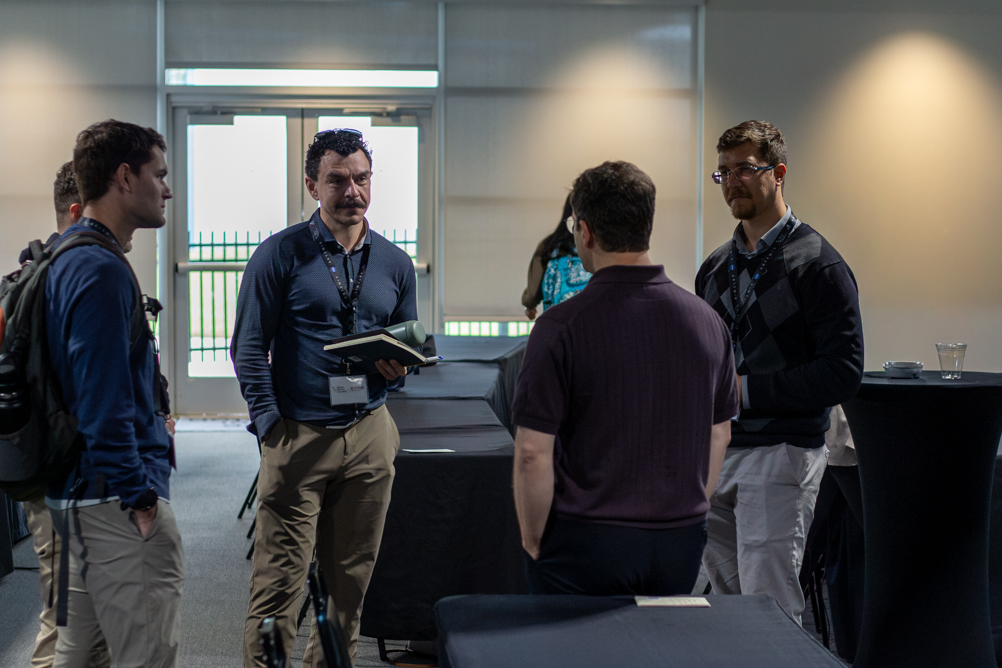
PASM teaches the physiology, history and operational foundations of aviation and space medicine. Commercial Space Day shows how those foundations are being applied at NASA, inside commercial companies, in research programs and across the institutions preparing humans to travel farther from Earth.
By early afternoon, Soyuz MS-29 had docked with the International Space Station after a two-orbit journey of approximately three hours. A UTMB residency graduate was aboard the station, with two fellow graduates supporting the mission as part of its ground-based medical team.
Back at Space Center Houston, PASM participants saw not one prescribed route into aerospace medicine, but a field filled with possible paths — and began to consider where their own expertise might fit.
Explore aerospace medicine at UTMB
Learn more about the Residency in Aerospace Medicine and the Principles of Aviation and Space Medicine course, and read about the three residency graduates who held roles on the Soyuz MS-29 mission.