School of Public and Population Health

News

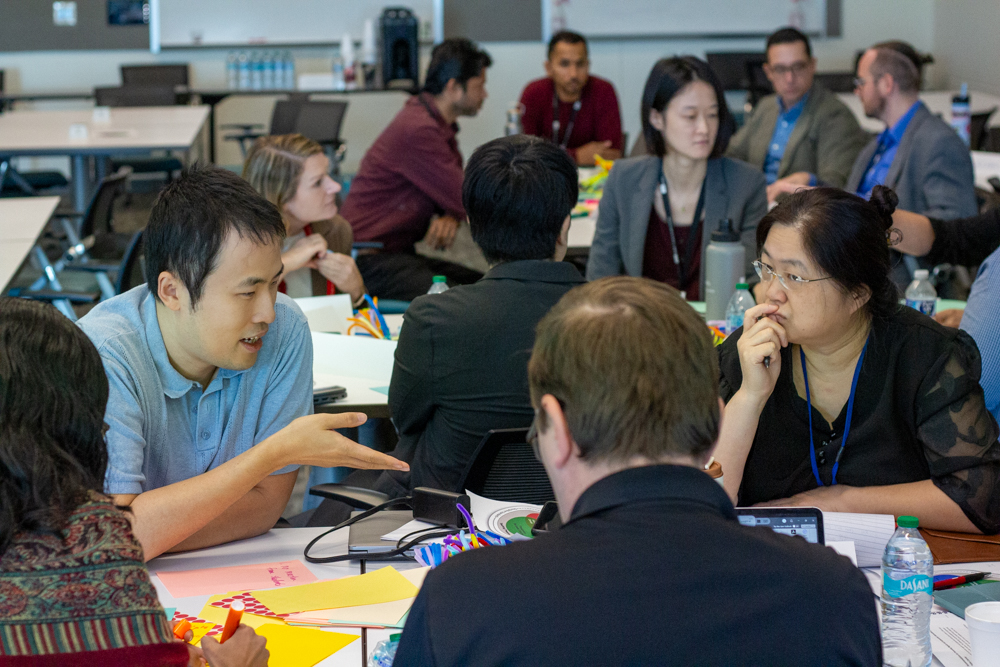
Groups of SPPH faculty seated and in discussion

Building Better Online Public Health Courses

The UTMB School of Public and Population Health is launching its first fully online degree, the MPH in Biostatistics, and faculty are setting clear expectations for what high-quality online learning at SPPH should be. To support that work, they dedicated a full-day retreat to the design, engagement, and accessibility choices that shape student experience in online courses.

To guide the conversation, SPPH invited Analisa McMillan, PhD, MSEd, from the University of Nebraska Medical Center College of Public Health. Dr. McMillan has more than two decades of experience teaching online and joined the retreat to share what she has learned about course design, engagement, and accessibility.
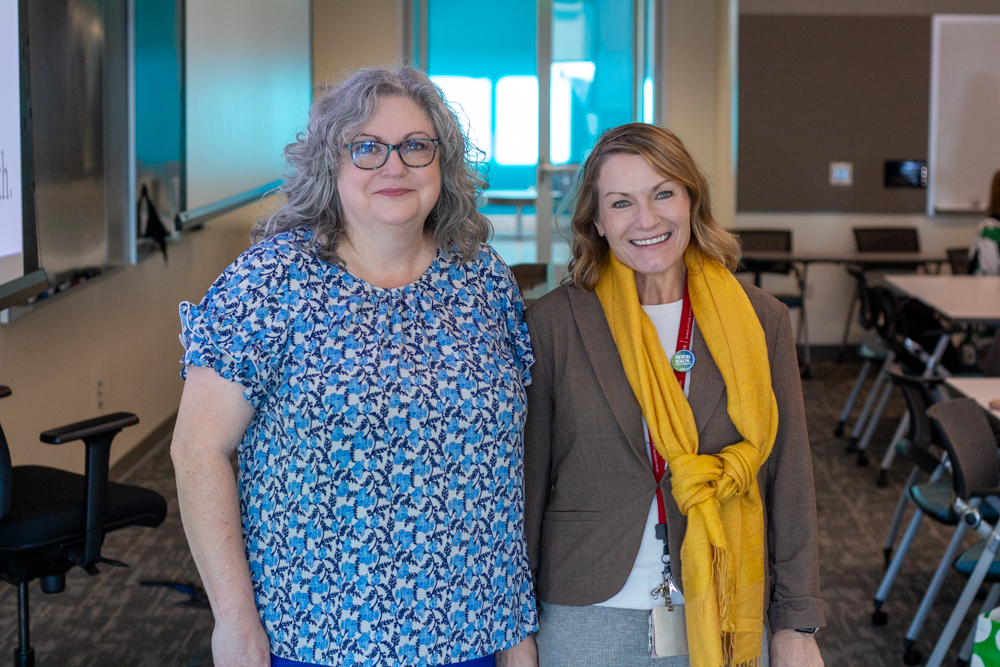
Dr. Analisa McMillan and Dr. Cara Pennel pose for a photo during the retreat

Shifting from “posting materials” to “designing an experience”

Early in the workshop, faculty named the first words that come to mind when they hear “online learning” — cameras off, long videos, lots of assignments. From there, the discussion moved toward a different picture of online courses that feel organized, personable, and manageable for working students.

A few themes surfaced again and again.

Online courses work best when the structure is clear on day one. Students should be able to open Blackboard and immediately see where each week begins, where to find instructions, and how to contact the instructor.

Presence matters. Short weekly announcements or videos, timely feedback, and an instructor voice in the discussion board let students know that someone is paying attention to their work.

Online teaching still needs boundaries around time. Several faculty members plan to block regular slots on their calendars for grading, replying in discussions, and recording brief updates so the course does not expand into every spare moment.

Rather than aiming for a single model, Dr. McMillan encouraged faculty to borrow ideas that fit their course goals and teaching styles.

Making interaction meaningful, not busywork

The group spent time on “regular and substantive interaction,” the federal requirement that online courses include frequent, content-focused engagement between instructors and students. Faculty treated this less as a rule and more as a quality marker for online education.

Examples that resonated included:

  • Discussion prompts that invite students to connect material with their own communities or practice settings instead of repeating definitions
  • Short walkthrough videos for complex assignments, paired with clear rubrics students can use as checklists
  • Instructor participation in discussion boards that asks follow-up questions, highlights strong posts, or connects ideas across threads without replying to every single student

Several participants shared that they already use reflection assignments or “mid-semester check-ins” in their face-to-face courses. The retreat helped them see how those same moves can anchor an online class in the MPH in Biostatistics and in other distance-learning offerings.

Designing for variety and access

Another throughline was Universal Design for Learning (UDL). Rather than planning around a single “type” of learner, faculty explored ways to give students a few different paths through the material.

That might mean pairing readings with a short overview video and transcript, or allowing students to choose between a written brief, a recorded presentation, or an infographic when the learning outcome focuses on analysis rather than format. Reflection prompts can help students connect new concepts with their own experience and future work in public health practice, data science, or clinical settings.

Accessibility requirements came up as well, especially new expectations around digital content. Dr. McMillan shared practical steps that fit existing workflows, such as turning on captions when recording, checking color contrast, using proper headings instead of manually formatted text, and adding concise alt text to meaningful images and charts.

The goal stays simple. Course materials need to work for students across devices, different internet speeds, and a wide range of access needs.

Turning concerns into design choices
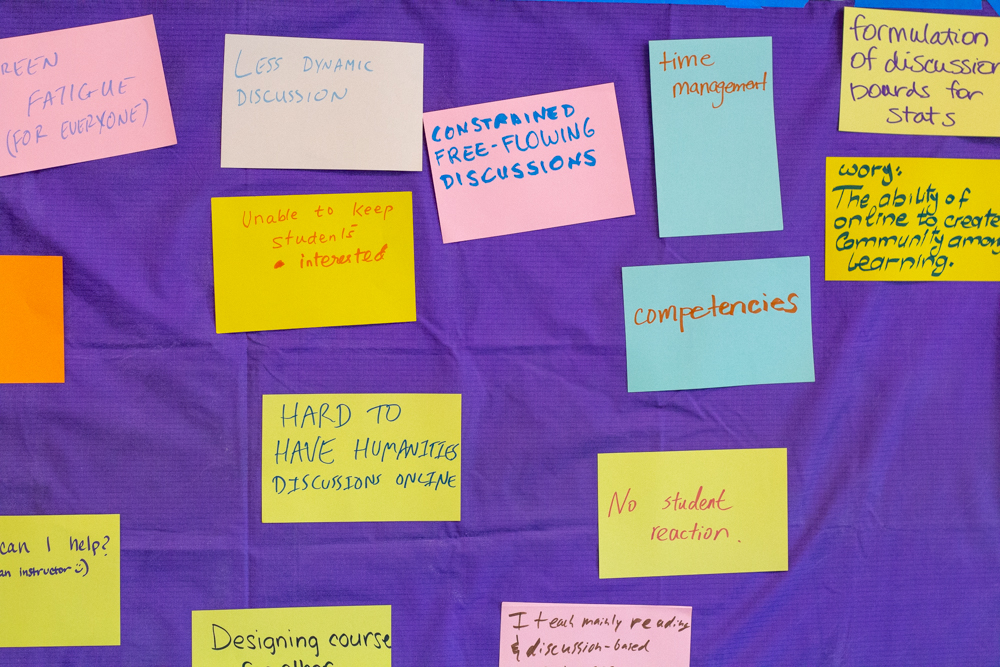
A collection of sticky notes featuring online teaching concerns

In the final activity, faculty wrote down specific worries about teaching online and then worked in small groups to draft possible responses. The sticky wall filled with notes about workload, discussion fatigue, group projects across time zones, and the loss of unplanned moments that often happen in a physical classroom.

Those concerns quickly became design tasks. Faculty outlined ways to:

  • reshape group work so teams have more time and clearer roles
  • rotate discussion partners so students meet more classmates over the term
  • use introductions, check-ins, and feedback videos to help students feel that someone is on the other side of the screen

Rather than closing questions, the retreat produced a shared starting point. Faculty left with common language, examples they can adapt, and a clearer sense of how to build high-quality online learning for the MPH in Biostatistics and other online public health programs.

For SPPH, the day affirmed an ongoing commitment to teaching that keeps evolving alongside the communities it serves, whether students are based in Texas, elsewhere in the United States, or in other countries.


Events

By the Numbers

Strength in numbers—driven by dedicated faculty, ambitious students, and impactful research funding shaping the future of public health.

* Approximations subject to change

4 Masters Programs

From the Seas to the Skies, We Are Public Health

Exploring health from every angle—land, sea, and sky—our diverse expertise shapes the future of public health.

Public Health Research

Advancing health through innovative, data-driven research that informs policy, improves care, and impacts communities globally.

Discover Our Research

Student Spotlight

Celebrating our students’ achievements, impact, and excellence—inside the classroom and beyond.

Groups of SPPH faculty seated and in discussion

Building Better Online Public Health Courses

The UTMB School of Public and Population Health is launching its first fully online degree, the MPH in Biostatistics, and faculty are setting clear expectations for what high-quality online learning at SPPH should be. To support that work, they dedicated a full-day retreat to the design, engagement, and accessibility choices that shape student experience in online courses.

To guide the conversation, SPPH invited Analisa McMillan, PhD, MSEd, from the University of Nebraska Medical Center College of Public Health. Dr. McMillan has more than two decades of experience teaching online and joined the retreat to share what she has learned about course design, engagement, and accessibility.

Dr. Analisa McMillan and Dr. Cara Pennel pose for a photo during the retreat

Shifting from “posting materials” to “designing an experience”

Early in the workshop, faculty named the first words that come to mind when they hear “online learning” — cameras off, long videos, lots of assignments. From there, the discussion moved toward a different picture of online courses that feel organized, personable, and manageable for working students.

A few themes surfaced again and again.

Online courses work best when the structure is clear on day one. Students should be able to open Blackboard and immediately see where each week begins, where to find instructions, and how to contact the instructor.

Presence matters. Short weekly announcements or videos, timely feedback, and an instructor voice in the discussion board let students know that someone is paying attention to their work.

Online teaching still needs boundaries around time. Several faculty members plan to block regular slots on their calendars for grading, replying in discussions, and recording brief updates so the course does not expand into every spare moment.

Rather than aiming for a single model, Dr. McMillan encouraged faculty to borrow ideas that fit their course goals and teaching styles.

Making interaction meaningful, not busywork

The group spent time on “regular and substantive interaction,” the federal requirement that online courses include frequent, content-focused engagement between instructors and students. Faculty treated this less as a rule and more as a quality marker for online education.

Examples that resonated included:

  • Discussion prompts that invite students to connect material with their own communities or practice settings instead of repeating definitions
  • Short walkthrough videos for complex assignments, paired with clear rubrics students can use as checklists
  • Instructor participation in discussion boards that asks follow-up questions, highlights strong posts, or connects ideas across threads without replying to every single student

Several participants shared that they already use reflection assignments or “mid-semester check-ins” in their face-to-face courses. The retreat helped them see how those same moves can anchor an online class in the MPH in Biostatistics and in other distance-learning offerings.

Designing for variety and access

Another throughline was Universal Design for Learning (UDL). Rather than planning around a single “type” of learner, faculty explored ways to give students a few different paths through the material.

That might mean pairing readings with a short overview video and transcript, or allowing students to choose between a written brief, a recorded presentation, or an infographic when the learning outcome focuses on analysis rather than format. Reflection prompts can help students connect new concepts with their own experience and future work in public health practice, data science, or clinical settings.

Accessibility requirements came up as well, especially new expectations around digital content. Dr. McMillan shared practical steps that fit existing workflows, such as turning on captions when recording, checking color contrast, using proper headings instead of manually formatted text, and adding concise alt text to meaningful images and charts.

The goal stays simple. Course materials need to work for students across devices, different internet speeds, and a wide range of access needs.

Turning concerns into design choices

A collection of sticky notes featuring online teaching concerns

In the final activity, faculty wrote down specific worries about teaching online and then worked in small groups to draft possible responses. The sticky wall filled with notes about workload, discussion fatigue, group projects across time zones, and the loss of unplanned moments that often happen in a physical classroom.

Those concerns quickly became design tasks. Faculty outlined ways to:

  • reshape group work so teams have more time and clearer roles
  • rotate discussion partners so students meet more classmates over the term
  • use introductions, check-ins, and feedback videos to help students feel that someone is on the other side of the screen

Rather than closing questions, the retreat produced a shared starting point. Faculty left with common language, examples they can adapt, and a clearer sense of how to build high-quality online learning for the MPH in Biostatistics and other online public health programs.

For SPPH, the day affirmed an ongoing commitment to teaching that keeps evolving alongside the communities it serves, whether students are based in Texas, elsewhere in the United States, or in other countries.

General Requests: (409) 772-1128
Applicants: (409) 747-7584