News

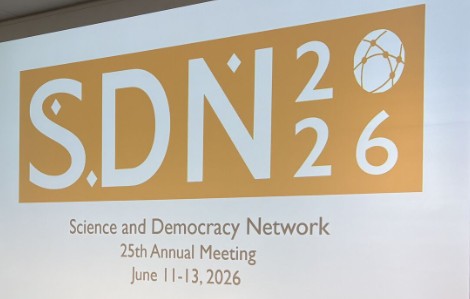
Dr. Alberto Aparicio presented at the Science and Democracy Network Annual Meeting in Potsdam’s Research Institute for Sustainability, Germany

Dr. Aparicio presented the work titled "Technomoral Entrepreneurship: Venture Formation and the Authorization of Germline Futures” at the Science and Democracy Network Annual Meeting in Potsdam’s Research Institute for Sustainability, Germany, on June 11. 

Human germline gene editing remains highly contested, yet start-ups continue to emerge with the goal of creating gene-edited children. In this presentation, I argue that these founders engage in technomoral entrepreneurship: a strategy of authorization based on persuasion, through which entrepreneurs seek to become legitimate actors in the governance of technological futures.


Events

By the Numbers

Strength in numbers—driven by dedicated faculty, ambitious students, and impactful research funding shaping the future of public health.

* Approximations subject to change

4 Masters Programs

From the Seas to the Skies, We Are Public Health

Exploring health from every angle—land, sea, and sky—our diverse expertise shapes the future of public health.

Public Health Research

Advancing health through innovative, data-driven research that informs policy, improves care, and impacts communities globally.

Discover Our Research

Student Spotlight

Celebrating our students’ achievements, impact, and excellence—inside the classroom and beyond.

Dr. Alberto Aparicio presented at the Science and Democracy Network Annual Meeting in Potsdam’s Research Institute for Sustainability, Germany

Dr. Aparicio presented the work titled "Technomoral Entrepreneurship: Venture Formation and the Authorization of Germline Futures” at the Science and Democracy Network Annual Meeting in Potsdam’s Research Institute for Sustainability, Germany, on June 11. 

Human germline gene editing remains highly contested, yet start-ups continue to emerge with the goal of creating gene-edited children. In this presentation, I argue that these founders engage in technomoral entrepreneurship: a strategy of authorization based on persuasion, through which entrepreneurs seek to become legitimate actors in the governance of technological futures.