News

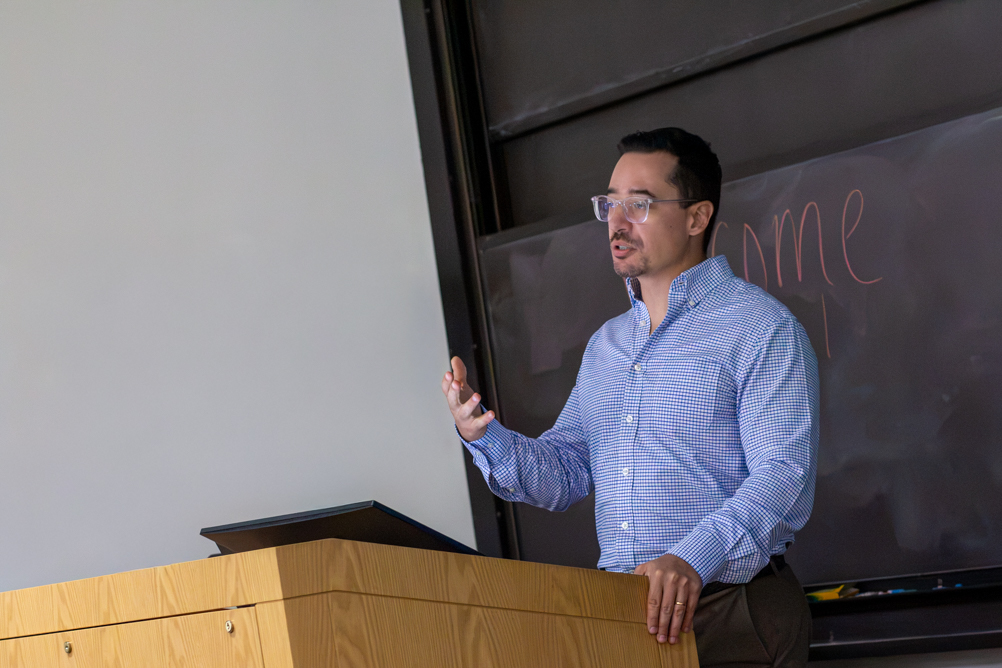
Dr. Alberto Aparicio gestures while delivering a seminar from a classroom lectern.

Your genome is data. Who gets to use it?

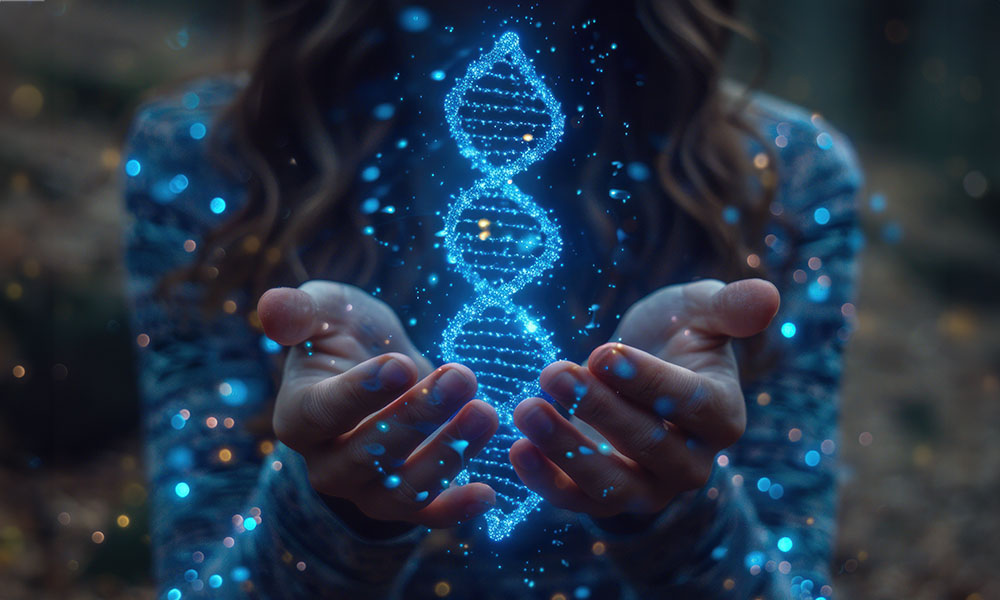
A home DNA test can estimate someone’s ancestry, identify genetic traits or suggest an elevated risk for disease. The results can feel deeply personal, but the data may also pass through companies, research databases and other systems the person being tested cannot fully see or control.

Alberto Aparicio, PhD, assistant professor in the Department of Bioethics & Health Humanities, explored those questions during a mini seminar for the UTMB community. The session previewed BHH 6396: Ethical, Legal, and Social Implications of Genomics, a graduate course offered in Fall 2026.

Ethical, legal and social implications research, commonly called ELSI, grew alongside the Human Genome Project. Federal leaders recognized that sequencing the human genome would generate questions that scientific research alone could not answer. A portion of the project’s funding was set aside to study concerns including privacy, genetic discrimination, testing, reproduction and the commercial use of genetic information.

Those early questions have followed genomic science into everyday life.

Direct-to-consumer testing allows people to obtain genetic information without beginning in a clinic. A test may offer insight into ancestry or health risks, but it can also create uncertainty. A genetic variant associated with a disease does not necessarily mean that someone will develop it. Consumers must decide what a probability means for their health and whether to seek medical guidance.

Genetic information can also reveal unexpected family relationships or provide information about relatives who never submitted a sample. Once data enters a commercial database, questions remain about who may access it, how long it will be retained and what happens if the company is sold or closes.

Dr. Aparicio also discussed a newer market for tests that estimate a person’s biological age using genetic or epigenetic markers. These tools may be useful in research, but commercial services can use different methods and produce different results. Consumers may receive an age estimate without enough information to judge its accuracy or decide what action to take.

ELSI research examines how these technologies are developed, governed and introduced into medicine and public life. It asks how genomic data can support research and health care while protecting the people and families represented within it.


Students can explore these issues in greater depth through BHH 6396: Ethical, Legal, and Social Implications of Genomics. The Fall 2026 course will cover the Human Genome Project, genetic testing, ancestry, data sharing, precision medicine, aging technologies and the responsibilities of researchers and institutions.

The class meets Wednesdays from 1 to 4 p.m. during the Aug. 31-Dec. 18 term. No previous science or humanities background is required.

For course and enrollment information, contact spphadmissions@utmb.edu or learn more about UTMB’s Bioethics and Health Humanities Graduate Program.
Events

By the Numbers

Strength in numbers—driven by dedicated faculty, ambitious students, and impactful research funding shaping the future of public health.

* Approximations subject to change

4 Masters Programs

From the Seas to the Skies, We Are Public Health

Exploring health from every angle—land, sea, and sky—our diverse expertise shapes the future of public health.

Public Health Research

Advancing health through innovative, data-driven research that informs policy, improves care, and impacts communities globally.

Discover Our Research

Student Spotlight

Celebrating our students’ achievements, impact, and excellence—inside the classroom and beyond.

Dr. Alberto Aparicio gestures while delivering a seminar from a classroom lectern.

Your genome is data. Who gets to use it?

A home DNA test can estimate someone’s ancestry, identify genetic traits or suggest an elevated risk for disease. The results can feel deeply personal, but the data may also pass through companies, research databases and other systems the person being tested cannot fully see or control.

Alberto Aparicio, PhD, assistant professor in the Department of Bioethics & Health Humanities, explored those questions during a mini seminar for the UTMB community. The session previewed BHH 6396: Ethical, Legal, and Social Implications of Genomics, a graduate course offered in Fall 2026.

Ethical, legal and social implications research, commonly called ELSI, grew alongside the Human Genome Project. Federal leaders recognized that sequencing the human genome would generate questions that scientific research alone could not answer. A portion of the project’s funding was set aside to study concerns including privacy, genetic discrimination, testing, reproduction and the commercial use of genetic information.

Those early questions have followed genomic science into everyday life.

Direct-to-consumer testing allows people to obtain genetic information without beginning in a clinic. A test may offer insight into ancestry or health risks, but it can also create uncertainty. A genetic variant associated with a disease does not necessarily mean that someone will develop it. Consumers must decide what a probability means for their health and whether to seek medical guidance.

Genetic information can also reveal unexpected family relationships or provide information about relatives who never submitted a sample. Once data enters a commercial database, questions remain about who may access it, how long it will be retained and what happens if the company is sold or closes.

Dr. Aparicio also discussed a newer market for tests that estimate a person’s biological age using genetic or epigenetic markers. These tools may be useful in research, but commercial services can use different methods and produce different results. Consumers may receive an age estimate without enough information to judge its accuracy or decide what action to take.

ELSI research examines how these technologies are developed, governed and introduced into medicine and public life. It asks how genomic data can support research and health care while protecting the people and families represented within it.


Students can explore these issues in greater depth through BHH 6396: Ethical, Legal, and Social Implications of Genomics. The Fall 2026 course will cover the Human Genome Project, genetic testing, ancestry, data sharing, precision medicine, aging technologies and the responsibilities of researchers and institutions.

The class meets Wednesdays from 1 to 4 p.m. during the Aug. 31-Dec. 18 term. No previous science or humanities background is required.

For course and enrollment information, contact spphadmissions@utmb.edu or learn more about UTMB’s Bioethics and Health Humanities Graduate Program.