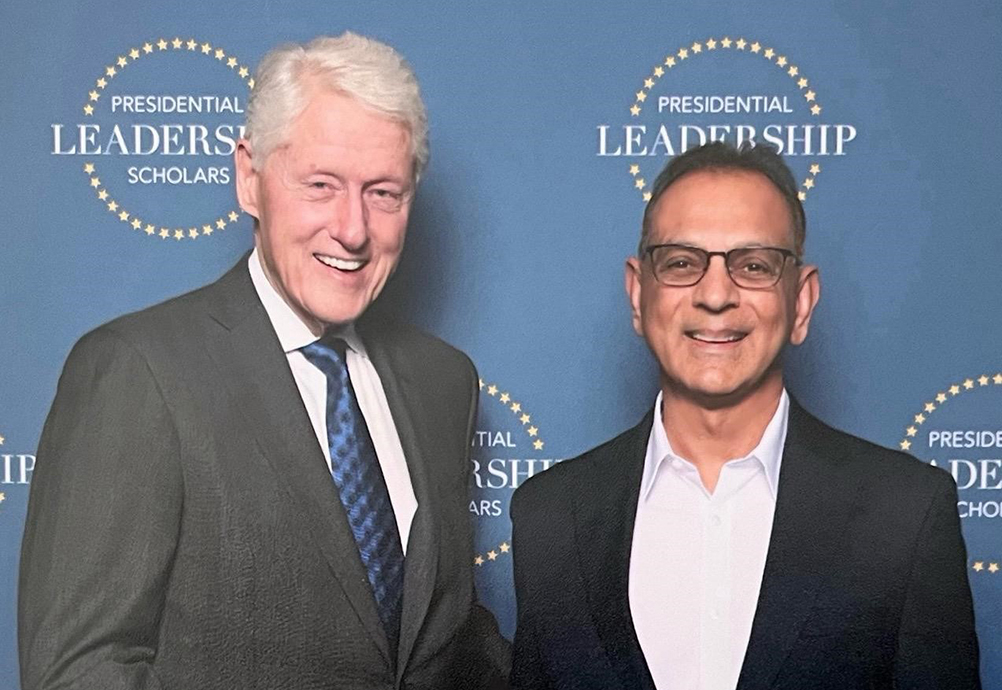
Dr. Suresh Bhavnani, a professor in the Department of Biostatistics and Data Science at the UTMB School of Public and Population Health, specializes in human-centered AI leading to interpretable solutions in public health and medicine. His research focuses on analyzing how non-medical determinants of health such as employment, housing, and access to care co-occur and affect health outcomes, with the goal of translating those findings into more precise public health policies.
In January 2025, Dr. Bhavnani was named a 2025 Presidential Leadership Scholar, joining a class of 57 Americans selected for their leadership potential and civic-minded projects. The program, a partnership among the presidential centers of George W. Bush, Bill Clinton, George H.W. Bush, and Lyndon B. Johnson, brings scholars to each center over six months to study leadership and develop projects with real-world impact. Dr. Bhavnani's project proposed redefining U.S. health policies to be more need-based using non-medical determinants of health, guided by human-centered AI.
In the reflection below, Dr. Bhavnani describes how encounters with three U.S. presidents across this journey impacted his thinking and led to operationalizing the concept of Precision Policy.
Reflection by Dr. Suresh Bhavnani
Precision Policy: How Encounters with Three US Presidents Transformed My AI Research
For many, AI lives in a world of massive data, powerful algorithms, and disruptive change. For me, it has become a deeply personal mission to use AI for improving the lives of Americans—a journey shaped by my family’s history and transformative encounters with three U.S. Presidents. These encounters taught me that for technology to truly serve a nation, it must be precise to serve human needs, while remaining understandable through the narratives of the people it aims to serve.
The Obama Letter: Inspirations from Home
My journey began at home, rooted in my family’s immigrant experience. After my mother suffered a serious hip fracture, President Obama's policies enabled me to care for her at home. I wrote to the President to share how this support was a lifeline. I described how her journey to recovery inspired me to apply for and receive a grant from the Patient-Centered Outcomes Research Institute. The grant enabled me to investigate how AI methods could help people like my mother reduce the number of times she was admitted to the hospital.
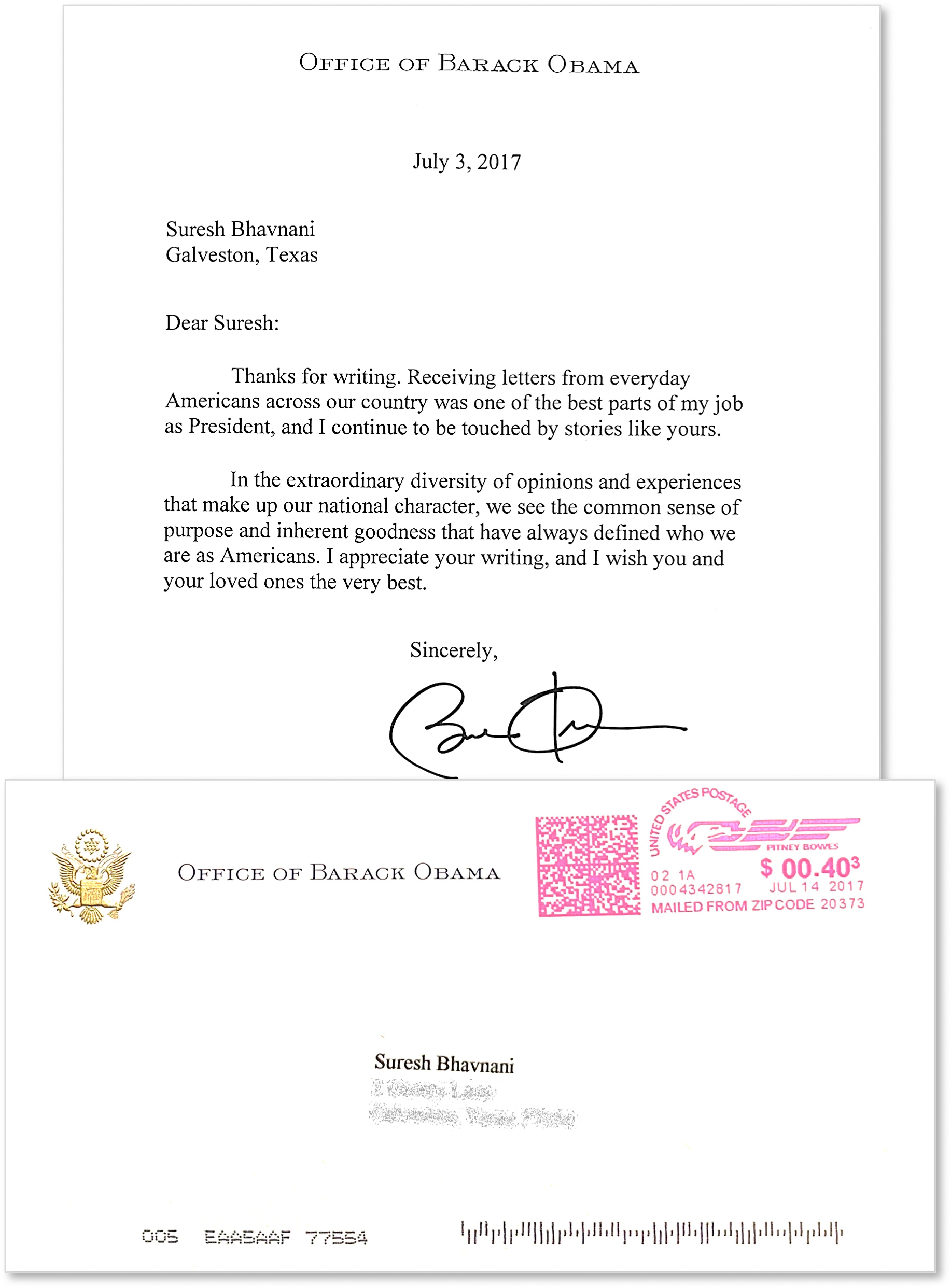
A signed letter from the Office of Barack Obama, dated July 3, 2017, responding to Dr. Bhavnani’s account of how the president’s policies helped to care for his mother at home, and inspired his research in using AI methods to address hospital readmission.
I didn't expect a personal reply, but he responded with a reflection that has stayed with me ever since: the best part of his job was encountering the inherent goodness of Americans through their personal stories.
This wasn't just a polite sentiment; it was a revelation. It showed me that policy is not only about statistics — it is also about individual narratives that are impacted by those policies. This encounter provided the "why" for my work: AI research must be rooted and explained through the personal stories of Americans.
George W. Bush and the Humility of AI: Making Tech Intuitive
In 2025, I was honored to be inducted into the 10th annual class of the Presidential Leadership Scholars (PLS) program—a milestone year for a partnership among the presidential centers of George W. Bush, Bill Clinton, George H. W. Bush, and Lyndon B. Johnson. Over six months, scholars study leadership through the lens of those presidencies, travel to each center, and develop a civic project with real-world impact.
As a Presidential Leadership Scholar, I had a brief encounter with President George W. Bush and mentioned my interest in AI and public policy. He was characteristically humorous about the complexities of AI, but underlying his levity was a profound lesson in humility.
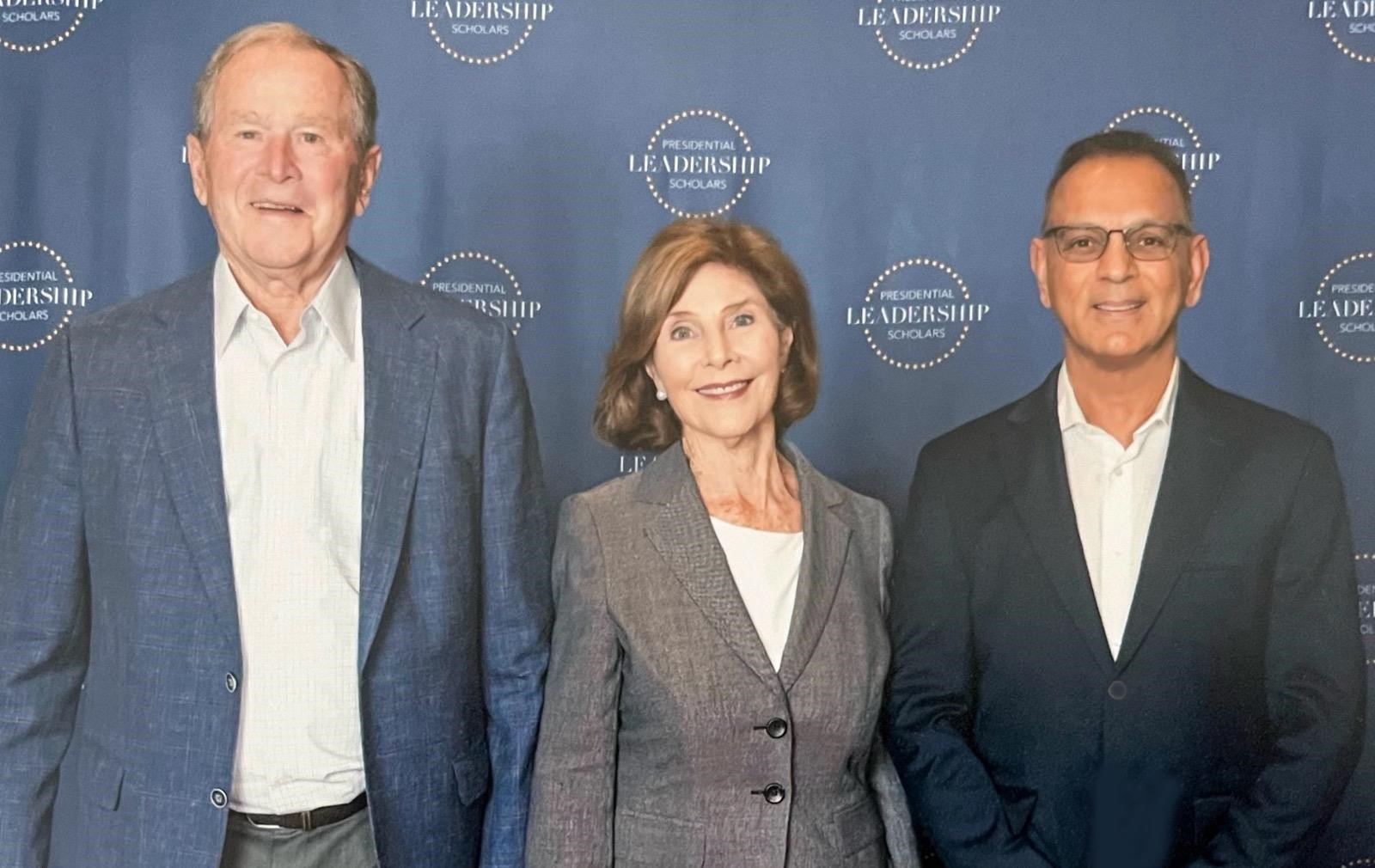
Dr. Bhavnani with President George W. Bush and First Lady Laura Bush at the Presidential Leadership Scholars program in 2025.
If powerful decision-makers find AI opaque, the responsibility for clarity lies with the researchers, not the leaders. I shared with him my commitment for bridging that gap, ensuring that even the most advanced technology remains understandable by those tasked with leading policy change. This encounter provided the "how" for my research: we must bridge the gap between complex AI algorithms and dedicated policymakers who use them to serve the public good.
The Clinton Vision: From My Mother’s Vote to "Precision Policy"
The final pieces of the puzzle for translating my research into action clicked during my discussions with President Bill Clinton and Secretary Hillary Clinton during the PLS program. When I showed President Clinton a visualization of our collective social impact projects and how it could expand to cover a decade of social impact projects, his enthusiastic response underscored the power of imagination and visual storytelling in civic service.
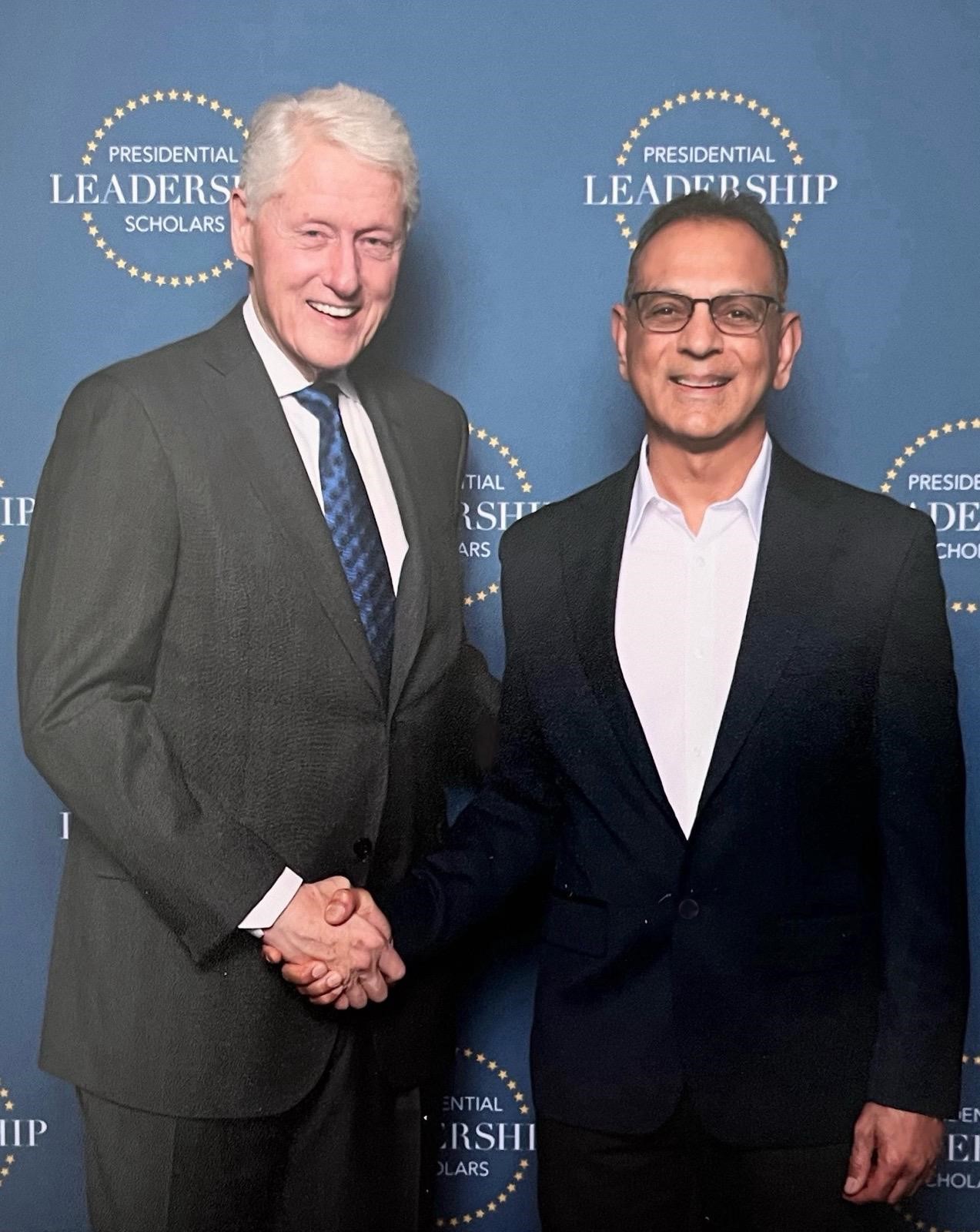
Dr. Bhavnani with President Bill Clinton at the Presidential Leadership Scholars program in 2025.
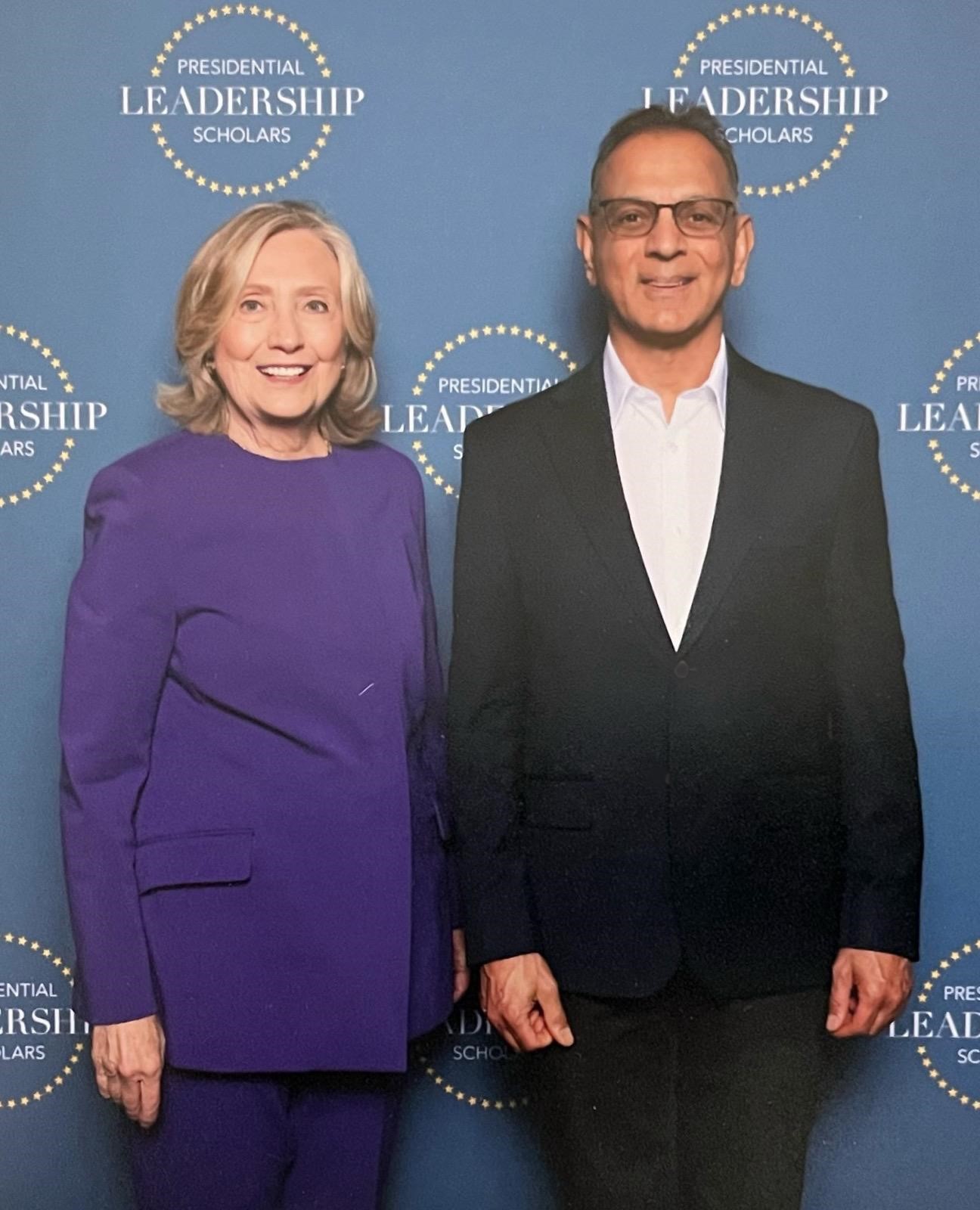
Dr. Bhavnani with Secretary Hillary Clinton at the Presidential Leadership Scholars program in 2025.
Later, I shared a personal story with Secretary Clinton: how my mother, on her deathbed, insisted on casting a final vote in her favor. Her genuine connection to that story brought my research full circle. I explained my vision for Precision Policy—using AI to ensure every American gets the specific help they need, exactly when they need it. Both of their responses and lives dedicated to civic service reminded me of what my civic-minded grandfather once said: “Give back your wealth to where it came from.”
The Path Forward
These encounters revealed that AI's true "wealth" lies in its potential to improve the lives of Americans, especially those vulnerable to being left behind in an age of rapidly evolving technology. By combining the power of personal narrative (Obama), the necessity of intuitive communication (Bush), and imaginative action (Clinton), I could now see a clear path towards social impact.
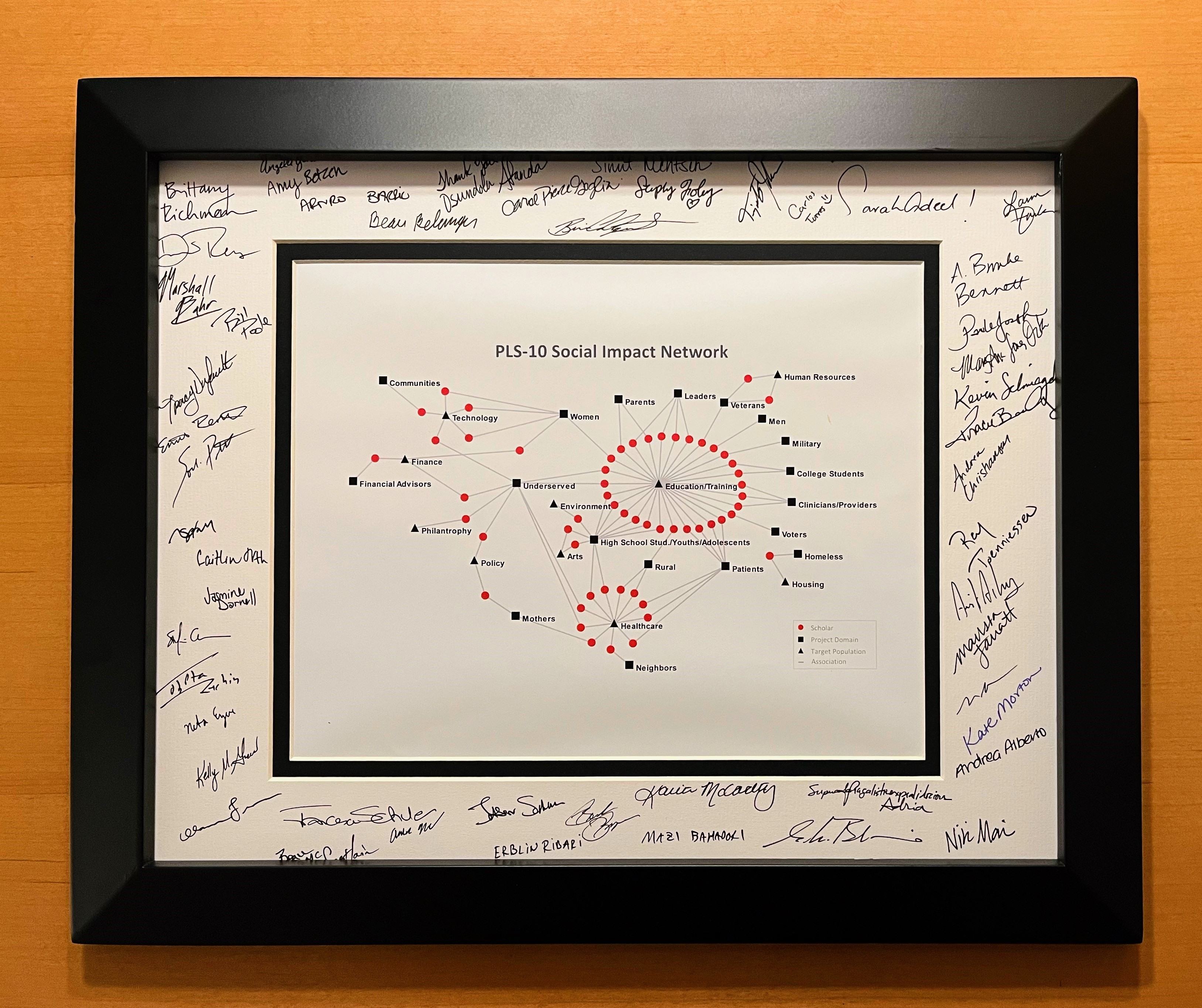
A visualization of the PLS-10 Social Impact Network mapping the collective projects of the 2025 Presidential Leadership Scholars class, signed by the PLS scholars. Dr. Bhavnani created the network visualization and presented it to the George W. Bush Presidential Center during the program.
Just as public health policies once empowered me to care for my mother at home, I am now dedicated to ensuring my AI research is intentionally designed to improve the lives of all Americans. This path forward is captured in this video on Precision Policies.
Dr. Bhavnani's research on subtyping non-medical determinants of health in the All of Us program was published in the Journal of Medical Internet Research and describes the open-source code available to the All of Us research community.
The author thanks the PLS program for enabling this transformational journey. The views and reflections expressed in this article are those of the author and do not necessarily represent the official positions or policies of the Presidential Leadership Scholars program, the associated Presidential Centers, or The University of Texas Medical Branch.