The National Academy of Inventors has announced its annual set of NAI Fellows—and six Houstonians made the list of the 164 honorees from 116 research institutions worldwide. One is Pei-Yong Shi, University of Texas Medical Branch professor and John Sealy Distinguished Chair in Innovations in Molecular Biology, Department of Biochemistry & Molecular Biology. He's also the vice chair for Innovation and Commercialization.

The mission of the Shine Academy is to serve the UT System through the support and promotion of excellence in all aspects of health science education, educational scholarship and leadership.
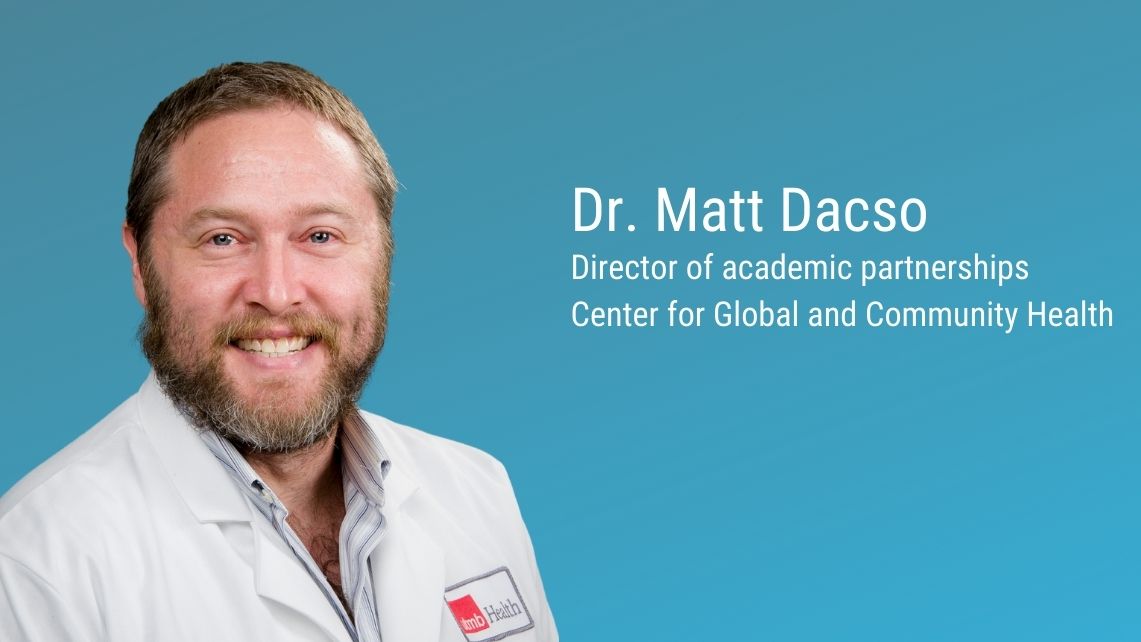
Dr. Matt Dacso, director of academic partnerships at the University of Texas Medical Branch Center for Global and Community Health, is one of seven people that Medical Bridges recently named Global Health Heroes.
Dr. Elizabeth Rodriguez Lien shares what parents need to know about the COVID-19 vaccine and the 5+ population.
This week (Dec. 5-11) is National Influenza Vaccination Week, which is an annual observance to remind everyone six months of age and older to get their annual flu vaccine. We hear many myths about the flu vaccine, and we’re here to bust them.
There's hope that a third shot of an mRNA vaccine—a so-called booster—will work better than two shots, says virologist Pei-Yong Shi at University of Texas Medical Branch in Galveston, who works with Pfizer. First off, he says, the third dose doesn't just return your antibody levels to what they were after the second shot. The level is even higher. On top of that, the booster can actually help broaden out your defenses so that you can fight off not just one variant of SARS-CoV-2 but many different versions of it. "The booster increases the level of antibodies that can push back against the variants," Shi says. "So that's another advantage to the booster."
Over the past two weeks, omicron has spread to at least seven of South Africa's nine provinces, quickly overtaking the country's outbreak—and thus, it appears, outcompeting delta, says virologist Pei-Yong Shi of the University of Texas Medical Branch in Galveston. “Based on the epidemiology data, it seems like the new variant has advantages in transmitting over the previous variants,” Shi said.
Dr. Pei-Yong Shi was referenced in the magazine’s coverage about the omicron variant.
Dr. Pei-Yong Shi discussed the new variant on Houston Matters, a radio program on Houston Public Media.
The University of Texas Medical Branch in Galveston will not enforce a vaccine requirement for its students and workforce, due to take effect Dec. 6, after a U.S. district judge granted a temporary injunction against a federal vaccine mandate for health care workers, UTMB announced Wednesday.

National Handwashing Awareness Week (Dec. 1-7) serves as an annual reminder to practice proper hand hygiene to curb the spread of disease.
The speedy detection and the rapid response of global health authorities shows how the world’s fight against COVID-19 has evolved. Scientists are now focused on finding new variants. In the case of Omicron, one was beginning to spread in South Africa, a nation with the resources to identify it—and the political will to announce it to the world. Experiments using infectious virus or that tease out the effect of individual mutations on its behavior will take more time, but research that looks at the interactions between Omicron’s mutant spike and antibodies should yield some answers on the immune evasion question in as little as a week, said Vineet Menachery, a virologist at the University of Texas Medical Branch.
Omicron, the newest coronavirus variant, is also the quickest to be labeled a "variant of concern" by the World Health Organization because of its seemingly fast spread in South Africa and its many troubling mutations. It carries a mutation called N501Y, which gave both Alpha and Gamma their increased transmissibility. Just last week, Scott Weaver of the University of Texas Medical Branch and colleagues reported in the journal Nature that this particular mutation made the virus better at replicating in the upper airway—think in the nose and throat—and likely makes it more likely to spread when people breathe, sneeze and cough.
World renowned for his work in Ebola treatments, Gary Kobinger is now tasked with moving the Galveston National Lab into the post-COVID world of viral research.
Dr. Gulshan Sharma, the chief medical officer at the University of Texas Medical Branch, said the county is in a much better place than it was exactly a year ago, when cases were on the rise, vaccines were yet to be approved and treatments, like monoclonal antibodies, weren’t yet widely available. “I’m cautiously optimistic,” Sharma said.
Most employees at the University of Texas Medical Branch don’t live on the island either, said Vivian Kardow, vice president of human resources and chief human resources officer. The medical branch imports 73 percent, 7,411, of its 10,122 Galveston campus employees from the mainland. Across all its campuses, the medical branch employs 15,361 people. The high cost of housing makes recruiting a challenge, she said.
Current and former CDC officials spoke of a man with a unique ability to solve medical mysteries by studying tissues for the signatures of the infectious agent at play. “He really was kind of the secret weapon for a lot of what was done at CDC on emerging diseases,” said James LeDuc, who recently retired as director of the Galveston National Laboratory at the University of Texas Medical Branch. Tom Ksiazek, a former CDC colleague and current professor of microbiology at UTMB’s Galveston National Laboratory, said Zaki pioneered the use of immunohistochemistry to identify foreign proteins in samples sent to the CDC, to help determine the underlying pathogens for a particular outbreak and understand the disease they caused. According to Ksiazek, Zaki’s reputation for cracking hard cases meant that the CDC has been enlisted to help solve outbreaks that other laboratories couldn’t.
In the Vaccine Smarts column, Drs. Megan Berman and Richard Rupp discuss the need for rubella immunizations. “We don’t hear much about rubella anymore, but it’s the most common cause of vaccine-preventable birth defects on the planet.”
Drs. Norbert Herzog and David Niesel write about how The American Revolution made smallpox spread more likely in this country. “Soldiers from England and Germany were arriving in large numbers, and recruits from all the colonies were joining the Continental Army. Soon after taking command in the summer of 1775, Washington assured the President of the Continental Congress that he would be ‘particularly attentive to the least symptoms of the smallpox,’ with plans to quarantine those suspected of having the disease in a special hospital.” Inoculations were also part of Washington’s strategy.
Dr. Sally Robinson addresses health and climate change. “Climate change is a threat to human health, and children are more at risk. Climate change affects everyone, but growing children have a higher exposure to air, food and water based on their body weight.”