Commemorating the 125th Anniversary of the Deadliest Hurricane in U.S. History
In 1900, Galveston, the largest and most prosperous city in Texas, was home to the state's first medical school, the University of Texas Medical Department. The campus included a single building, the Ashbel Smith Building, known then and now as “Old Red.”
On September 8, 1900, Galveston was struck by one of the most devastating natural disasters in American history. A hurricane with winds exceeding 120 miles per hour and a storm surge over 15 feet swept across the island. Entire neighborhoods were destroyed, homes collapsed, families disappeared. By the time the water receded, between 6,000 and 8,000 lives had been lost.
A Building That Stood
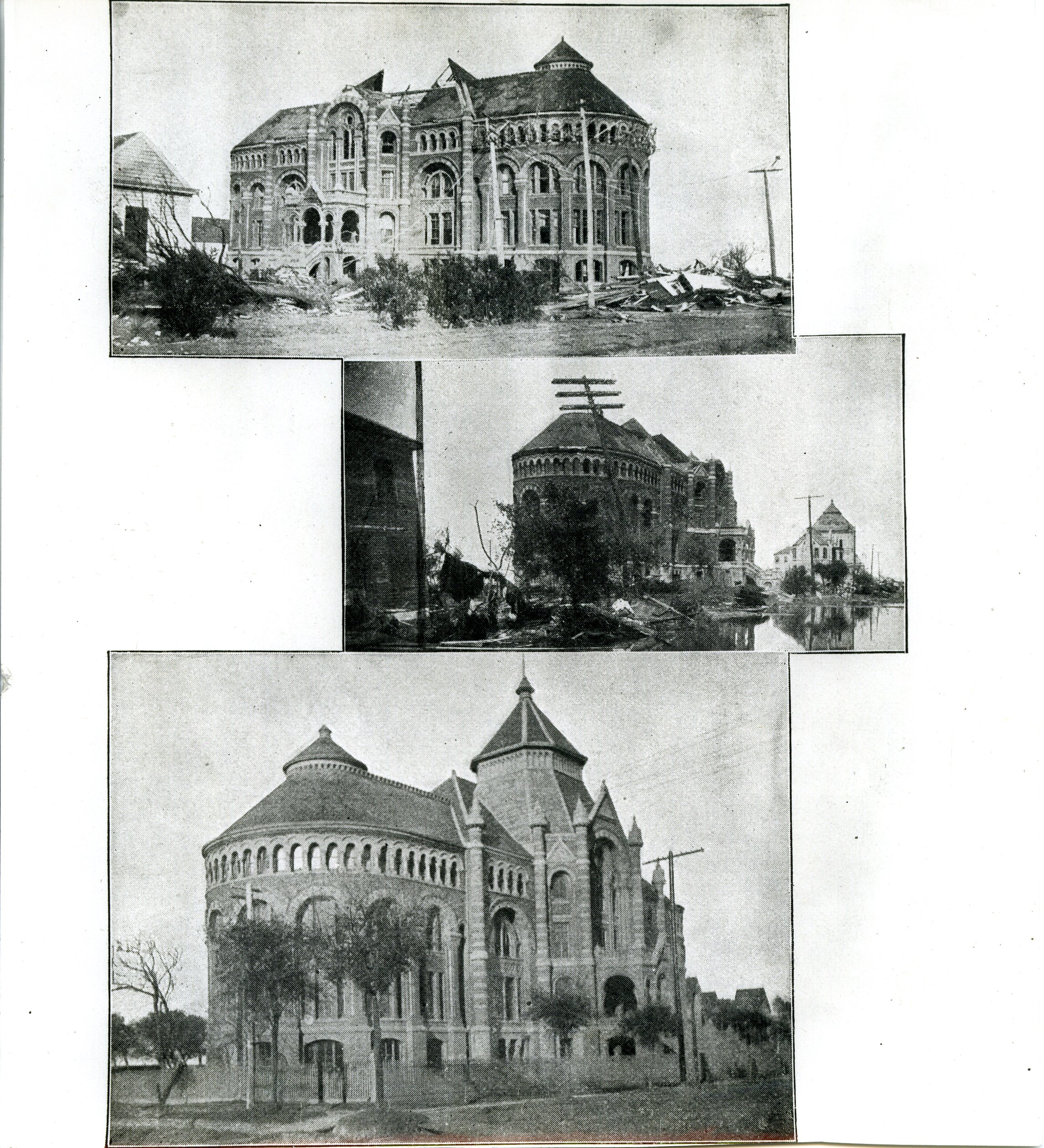
Old Red was one of the few major buildings in Galveston to survive. Its roof was damaged, but its structure held strong. When students and faculty who had sheltered inside Old Red during the storm emerged, they faced a city in ruins.
With Galveston cut off from the mainland and its hospitals either destroyed or overwhelmed, UTMB, at just nine years old, became a field hospital. Classrooms and corridors were converted into treatment areas. Supplies were scarce, power was gone, but the work of care began immediately.
With guidance from faculty, medical students treated the injured, often with little more than bandages, antiseptic, and sheer determination. Faculty and nursing students provided round-the-clock care in improvised conditions. The line between student and practitioner disappeared overnight.
Rebuilding With Purpose
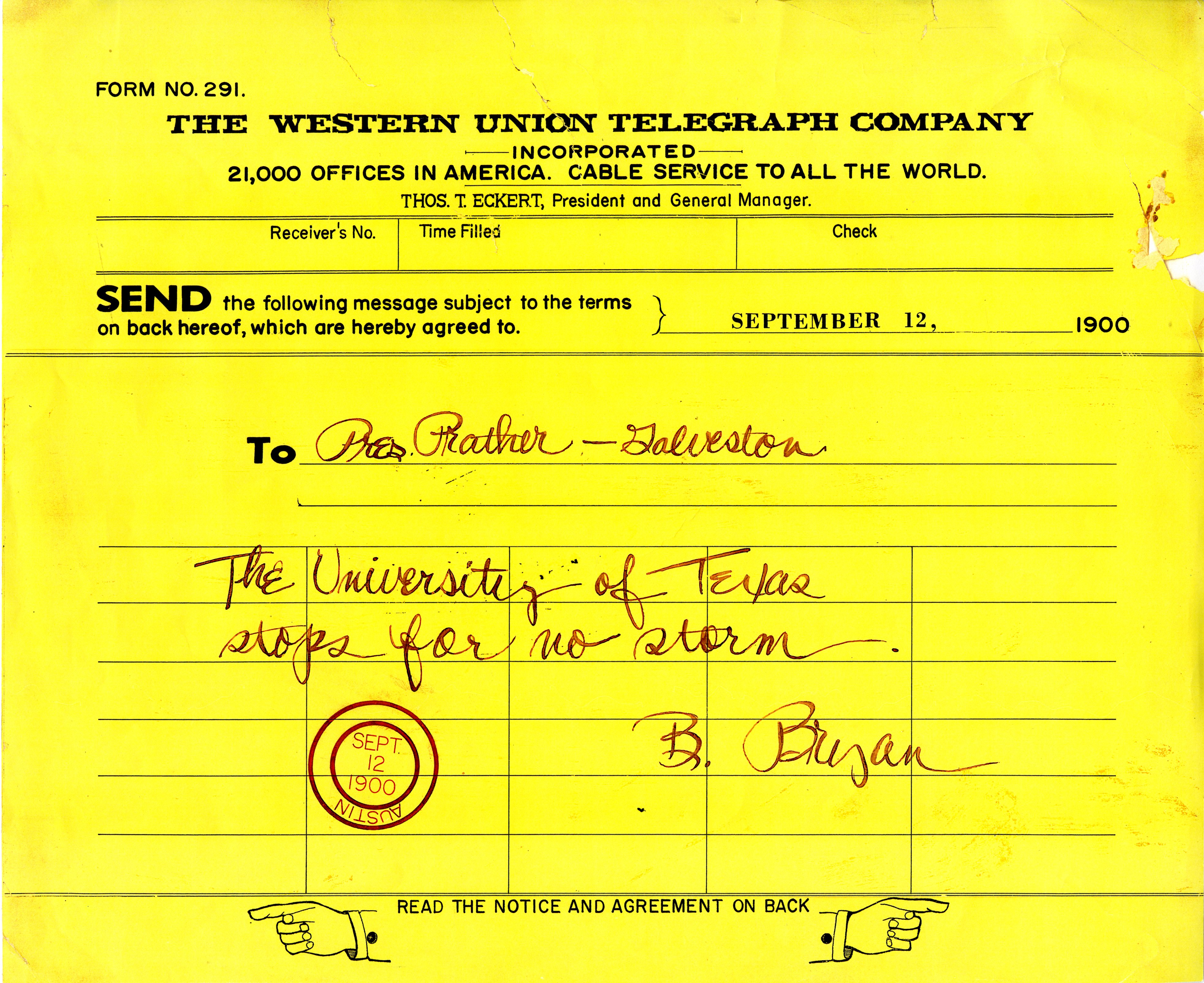
Despite the losses, UTMB's mission did not pause. In a telegram sent September 12, 1900, the Board of Regents declared that “The University of Texas stops for no storm,” and classes resumed soon after. The school rebuilt quickly, restoring and even upgrading its facilities. Skylights were added to the dissection rooms, and new equipment arrived within the year.
In 1901, UTMB appointed its first woman faculty member, Marie Charlotte Schaefer. In the span of a single year, the institution had not only recovered but taken steps forward.
Remembering What Was Endured
The 1900 storm was a defining moment for UTMB. It tested not only the strength of its buildings but the resolve of the people who worked and studied there. Many had lost homes, friends, or family, but continued to serve.
That legacy still defines UTMB. It did not simply survive the deadliest storm in U.S. history, it answered it with service, care, and a renewed sense of purpose.
Photo credits: Old Red after the hurricane; Board of Regents telegram – UTMB Blocker Library