Keeping Kids Healthy by Dr. Sally Robinson
The Merriam-Webster definition of language is a system of words or signs (written, spoken or gestures) that people use to express thoughts and feelings to each other. Speech is the incredible things humans do with their mouths and throats to make meaningful noises. Nobody knows when speech began but most believe that it began long before Neanderthals.
It doesn’t take one specific gene to talk. Instead, thousands of genes interact in complex, overlapping networks to build a language-ready brain, vocal cords, and mouth structures. The ability to speak requires a delicate and coordinated balance of tiny muscles, ligaments, bones, and cartilage of exactly the right length, tightness and positioning to push air out in just the right amount and the right force. Bill Bryson explains in his book, The Body, that the tongue, teeth and lips must be nimble enough to take these throaty breezes and push them out into the small variations of a unit of sound that can distinguish one word from another. This complicated process must happen without compromising the ability to swallow or breath.
Somehow in the slow process of evolution humans end up with brains big enough for complex thoughts and vocal tracts uniquely able to say them. The larynx (voice box) is made of nine cartilages, six muscles and a bunch of ligaments, two of which are vocal folds. When air is forced through the folds, they can make a variety of sounds and with the help of tongue, teeth and lips make words.
Of the 1000’s of speech related genes a few major players have been identified. FOXP2 is called the “speech” gene because it was the first to be directly linked to language disorders. It regulates the activity of hundreds of other genes, forming brain circuits needed for speech. Other genes, ROBO2 & KIAAO319, have impact on vocabulary development, reading, and processing the sounds that make up speech.
Massive amounts of data have geneticists looking at vast networks of neurons working together to enable babies to develop speech and understand language. As geneticists untangle the multitude of genes and understand their function more information can help with speech and reading difficulties.
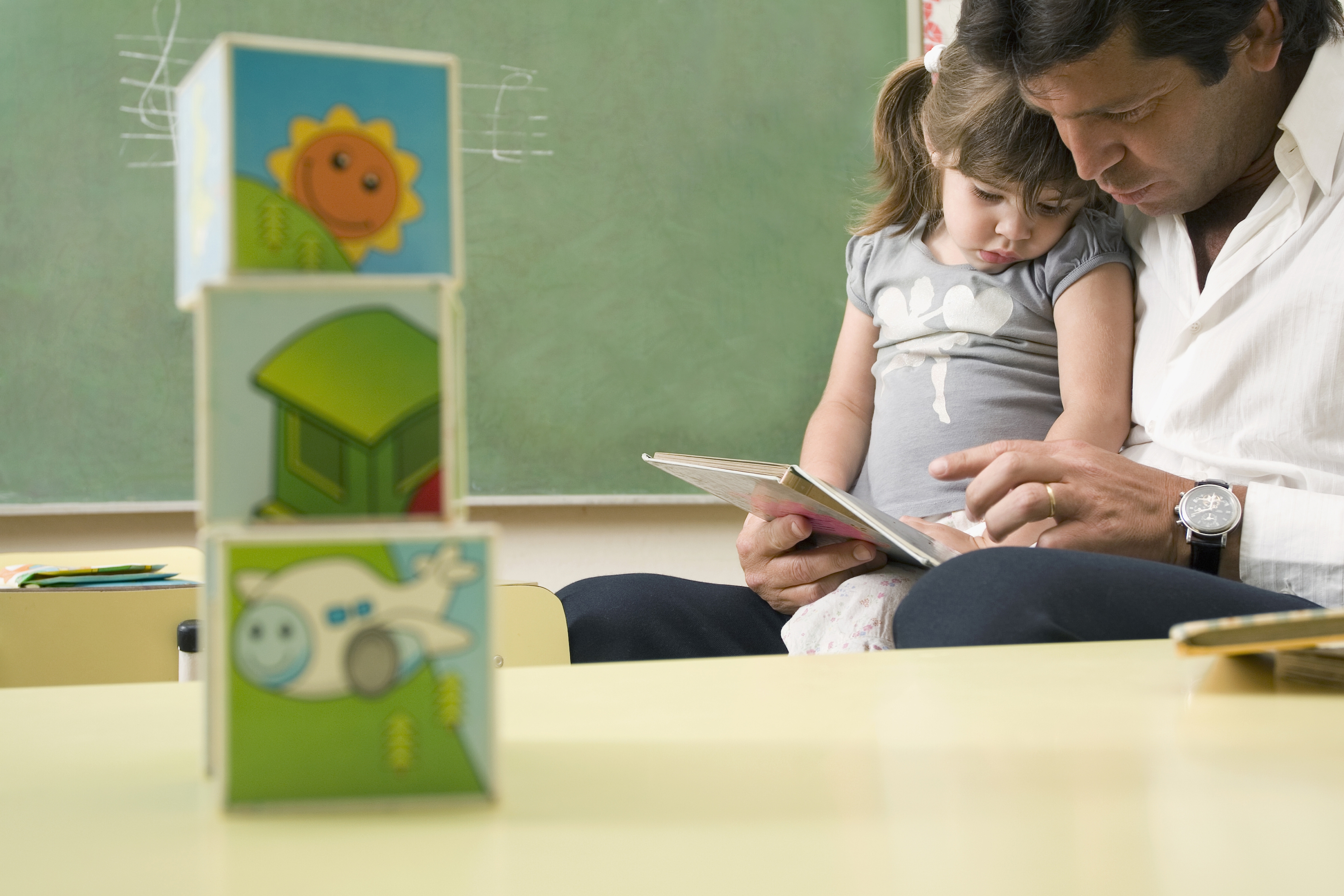
Reading to babies is a very good way to teach your baby to speak and eventually to read. Repetition of a book can be frustrating for the reader, but repetition with excitement is a great teacher. Stop to look at the pictures and ask your child to name things in the picture. As the child grows older run your finger under the words as you are reading. If your child begins to be able to recite the words of a well-known story, encourage reading aloud without taking time for sounding or corrections.
Having the television on does not encourage speech as the words are background noise without human interaction. Even “educational” TV is more effective when re-enforced face to face. Take time to speak to your baby and smile as they “speak” to you. Communication is more than words.
Sally Robinson, MD Clinical Professor
UTMB Pediatrics - Children's Complex Care
Also see: Pediatric Primary Care